E-Pedal Vehicle: Solar Public Transport with Gamification
Maedcore designs the autonomous E-Pedal vehicle: solar energy + passenger pedalling + rewards app. Sustainable public transport for cities.
Written by Maedcore
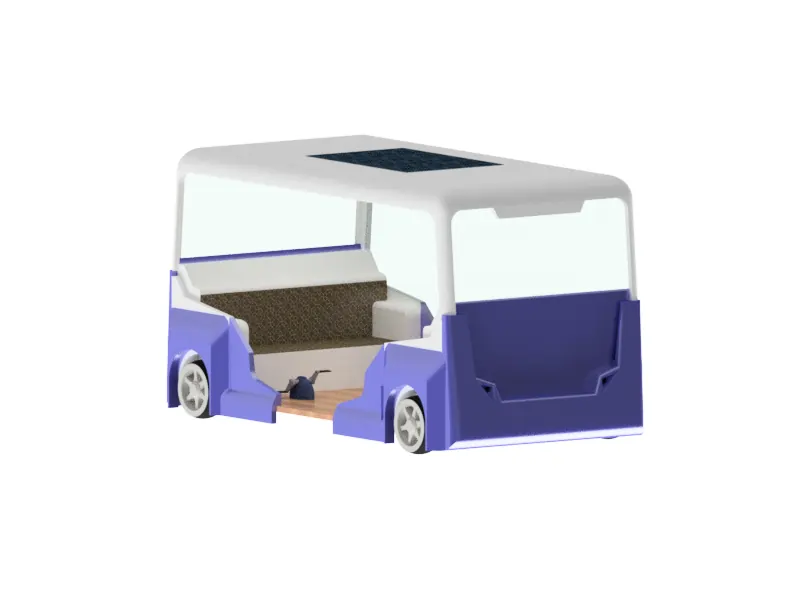
ECO-Pedal Vehicle: Autonomous Public Transport with Solar Energy and Gamification
Executive summary: Maedcore designed the concept and technological system of the autonomous vehicle «ECO-Pedal», a self-sustaining urban public transport solution that combines integrated solar panels with a passenger pedalling system for distributed energy generation. The project also includes a mobile rewards application that gamifies passenger participation, turning the act of pedalling into points redeemable for local goods and services. The result is a concept for sustainable, autonomous mobility with civic engagement mechanics.
The Problem: Public Transport Still Depends on Fossil Fuels
Cities account for more than 70% of global energy consumption and urban transport is one of its biggest contributors to CO₂ emissions. Electric buses and trams reduce direct emissions but still depend on the electricity grid, which in many countries is partly powered by fossil fuels.
The challenge Maedcore set itself: design a public transport vehicle that could generate its own energy in a self-sustaining way, without compromising passenger comfort or operational efficiency.
The Solution: Two Energy Sources + Autonomy + Gamification

The «E-Pedal» vehicle design integrates three differentiating components:
1. Integrated Solar Energy
The vehicle is equipped with solar panels integrated into its external structure — roof and sides — that capture solar energy throughout the day. This energy powers the electric propulsion system and auxiliary systems (climate control, lighting, connectivity), allowing the vehicle to operate cleanly even on long routes.
2. Passenger Pedalling System
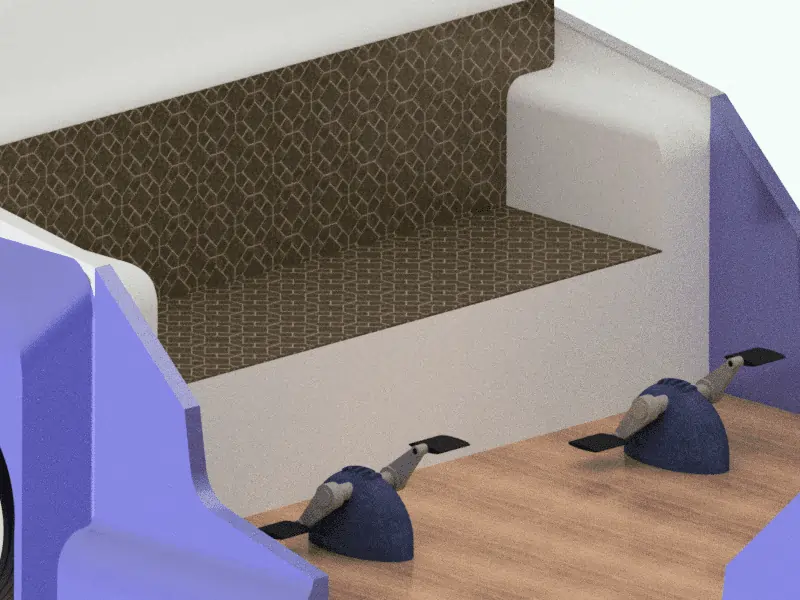
To complement solar energy — especially on cloudy days or during start-up — the vehicle interior incorporates a pedalling system in the seats. Passengers can pedal while seated without any additional postural effort. The kinetic energy generated is converted into electrical energy stored in the vehicle’s batteries, reducing the load on the electric motors.
The key design principle: pedalling is optional and comfortable, not mandatory or uncomfortable. Passengers who do not want to pedal simply do not.
3. Incentives and Gamification App
To turn optional pedalling into a habitual and widespread practice, Maedcore developed a mobile rewards application integrated with the vehicle’s sensors:
- Passengers identify themselves on the vehicle through the app.
- Each kilojoule of energy generated by pedalling translates into points.
- Points are redeemable for discounts at local businesses, event tickets, public transport credits or municipal benefits.
- The system includes rankings, weekly challenges and consistency rewards — gamification mechanics that maintain long-term engagement.

Autonomous Technology and Safety
The «E-Pedal» vehicle is designed with autonomous driving capabilities that reduce the need for a human driver and optimise route efficiency. The system includes:
- LiDAR sensors and cameras for obstacle detection and urban navigation.
- Dynamic trajectory adjustment in real time in response to pedestrians, vehicles or unforeseen obstacles.
- Autonomous emergency braking system.
- V2I connectivity (Vehicle to Infrastructure) for traffic light optimisation and urban flow.
ECO-Pedal Vehicle Benefits
| Benefit | Impact |
|---|---|
| Minimal carbon footprint | Operation on solar + human energy = zero direct emissions |
| Energy self-sufficiency | Requires no charging infrastructure at stops |
| Healthy habits | Pedalling promotes physical activity during the journey |
| Civic engagement | Gamification turns passengers into active agents of sustainability |
| Operational efficiency | Autonomy reduces driver staffing costs |
Urban Transport Applications
- Metropolitan areas: reduction of congestion and emissions in high-density corridors.
- Tourist zones: interactive and ecological experience that reinforces the city’s sustainable image.
- University campuses and business parks: internal mobility between buildings with no environmental impact.
- Cities with LEZ restrictions (Low-Emission Zones): certifiable zero-emission alternative.
Technologies Used
Project developed with: Mechatronics — Robotics — Artificial Intelligence — Embedded Systems
Is Your City Looking for Sustainable Mobility Solutions?
The ECO-Pedal is a concept ready to pilot. Contact Maedcore to explore how to adapt this system to the needs of your municipality, tourist zone or campus.
Talk to Our Team | View Mechatronics Projects | Robotics Services
Ready to transform your company?
Book a free 30-minute meeting with an engineer.