AI and Data in Vertical Farming: The Maedcore + Tierra Case Study
Maedcore and Tierra optimise vertical farms with real-time data analysis: IoT sensors, dashboards and agricultural BI. A real success story.
Written by Maedcore
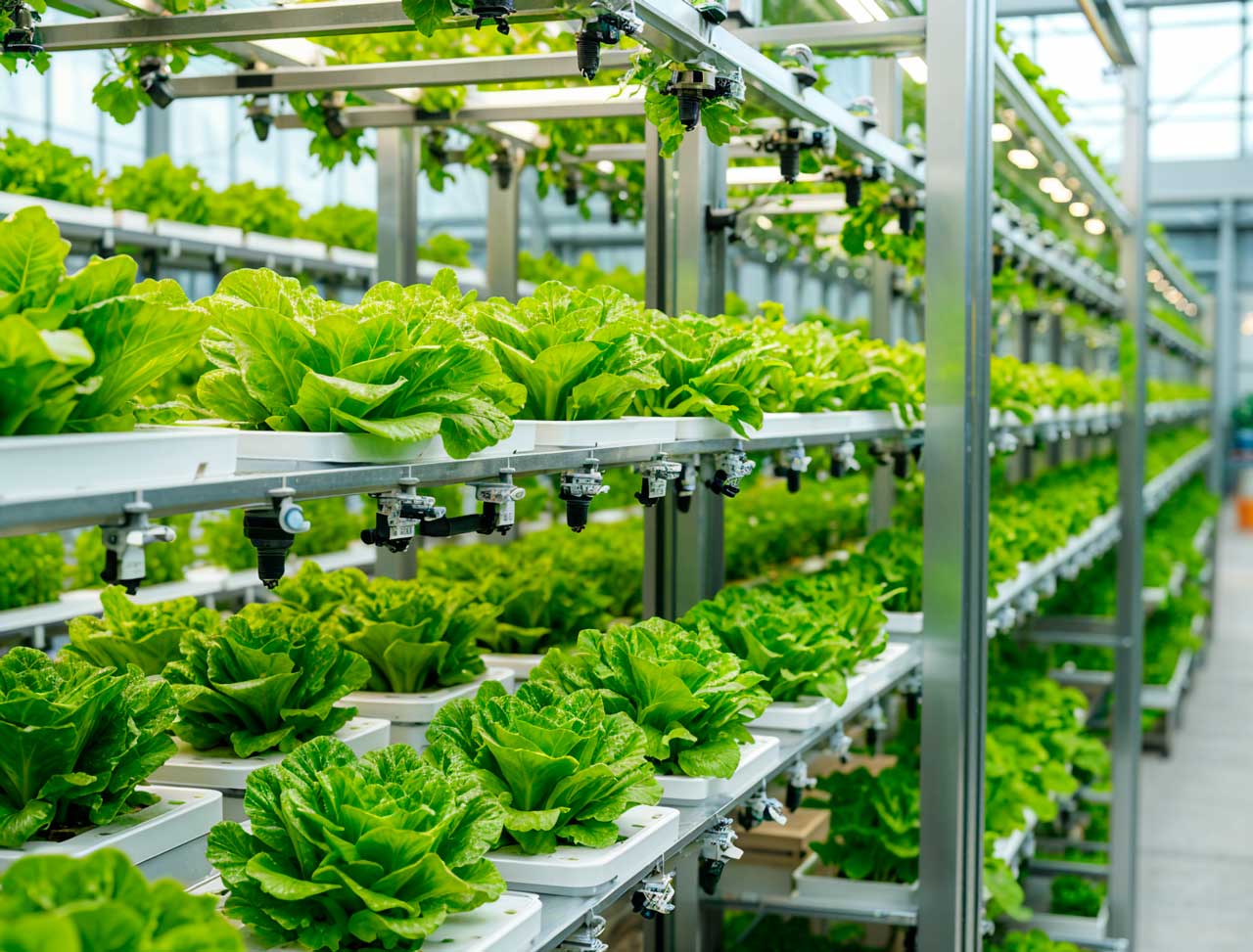
The Challenge: Managing the Complexity of an Urban Vertical Farm
Vertical farming — growing food in stacked layers inside controlled buildings — promises to revolutionise urban food production. However, its efficiency depends on precise control of dozens of simultaneous variables: temperature, light, CO₂, humidity, water pH, nutrients and more. Without advanced technology, this complexity is unmanageable at scale.
Tierra, a leader in sustainable vertical farming, needed a technological solution that went beyond simple sensor control: a platform that connected the farm’s physical data with business intelligence.
The Solution: The Maedcore + Tierra OS Technology Stack
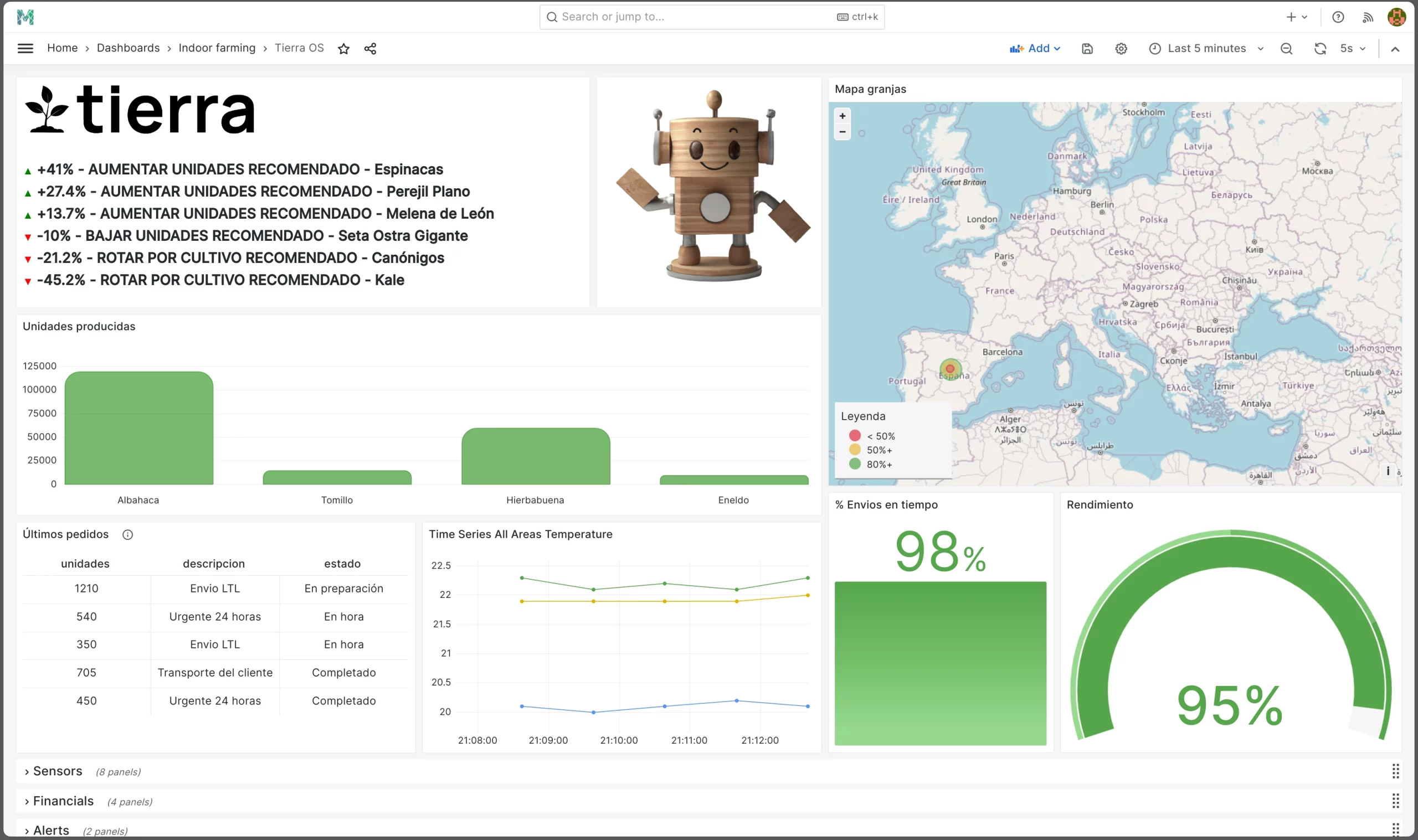
Tierra OS: Comprehensive Agricultural Business Management
Tierra OS is Tierra’s agricultural operating system. It controls all production and business variables: raw material sourcing, market trend tracking, client-specific production customisation and order management. It is the organisational brain of the farm.
Maedcore Software: IoT Monitoring and Business Intelligence
Maedcore’s technology layer complements Tierra OS with two modules:
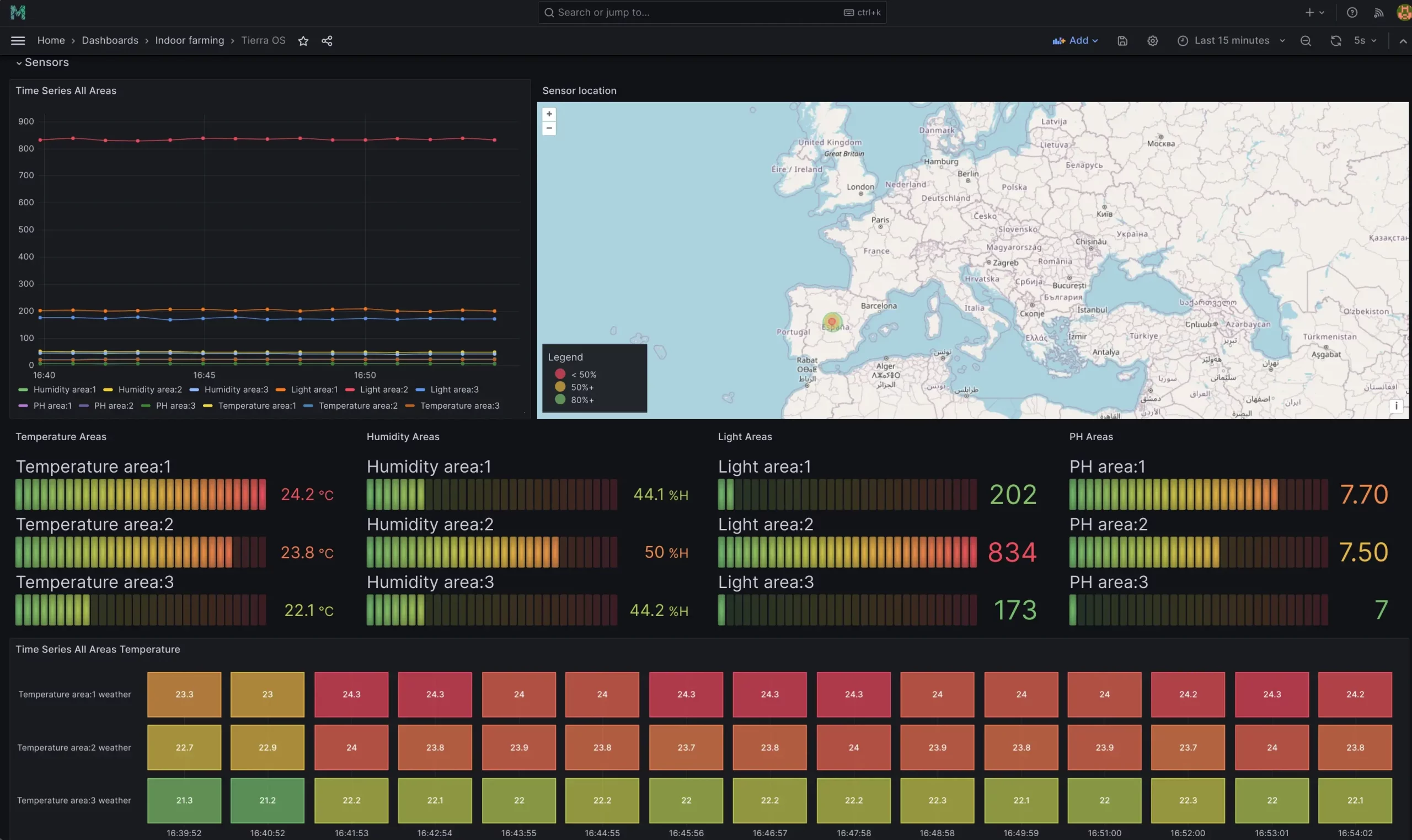
Module 1 — Real-Time Monitoring:
Continuously tracks and manages the critical physical conditions of each growing level:
- Ambient temperature and humidity
- Light intensity and spectrum
- Water pH and electrical conductivity
- CO₂ and O₂ levels
Automatic alerts notify deviations before they affect crops, reducing production losses.
Module 2 — Business Data Analysis:
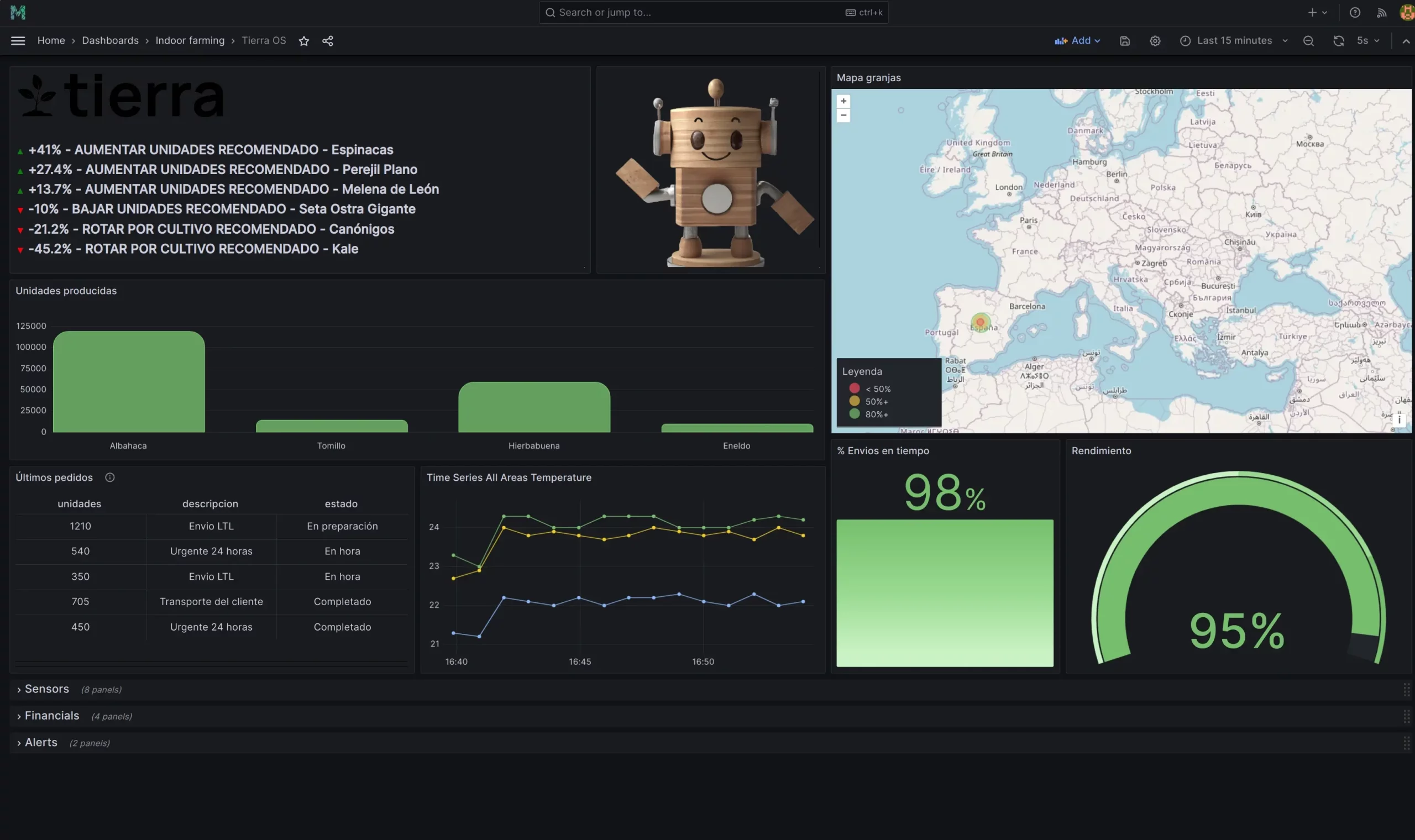
Beyond physical sensors, the platform aggregates and analyses business data:
- Sales and revenue by crop and period
- Customer base and demand patterns
- Quantities produced vs. targets
- Performance by variety and growing cycle
This makes it possible to identify which crops are most profitable, anticipate demand and adjust production weeks in advance.
Results: Measurable Benefits of Data in Vertical Farming
The deployment of this integrated solution delivers quantifiable benefits across three dimensions:
Operational Efficiency: Comprehensive control of growing conditions ensures a consistently optimal environment, eliminating deviations that previously required manual intervention. Farm technicians shift from reacting to problems to preventing them.
Production Optimisation: Analysing historical demand patterns allows adjustment of what and how much to grow, reducing food waste and maximising margins per harvest.
Strategic Decision-Making: Tierra’s management team has consolidated data in a single dashboard to make production, marketing and expansion decisions based on evidence, not intuition.
Market Context: The AgriTech Opportunity
The global vertical farming market will reach $35 billion by 2028, driven by urbanisation, climate change and growing demand for fresh, locally grown food. The enabling technologies — agricultural IoT, artificial intelligence, data analytics and automation — will determine which operators manage to scale profitably.
The Maedcore–Tierra partnership is an example of how data technology turns a vertical farm into a scalable and competitive business.
Ready to transform your company?
Book a free 30-minute meeting with an engineer.