Pi(x)el: Interactive Electronics for Filip Ćustić's Digital Art
Maedcore designs the electronics for Pi(x)el, a work by Filip Ćustić: 25 automated screens, touch and distance sensors, exhibited at Espacio SOLO Madrid.
Written by Maedcore
Pi(x)el: The Digital Art Installation Maedcore Made Interactive
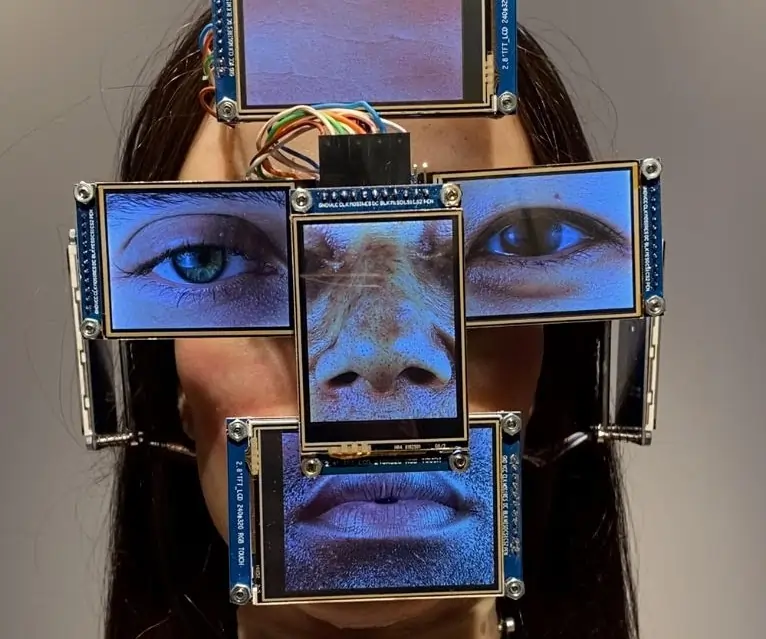
Executive summary: Maedcore collaborated with international artist Filip Ćustić to design and manufacture the entire electronic infrastructure for his interactive digital art work Pi(x)el, exhibited at Espacio SOLO (Madrid). The installation consists of 25 automated screens that randomly play videos of the human body, with a dual interaction system — distance sensors and touchscreens — that allows the viewer to become an active part of the artistic experience. Maedcore managed hardware design, electronics manufacturing, control system programming and the integration of all components.
The Artist: Filip Ćustić
Filip Ćustić is a Croatian artist internationally recognised for his ability to combine traditional craftsmanship with cutting-edge digital technologies. His work explores perception, identity and emotions in the digital environment, creating pieces that challenge the boundary between the physical and the virtual. Pi(x)el was conceived as an installation that plays with the fragmentation of the human figure through the pixel — the minimum unit of digital representation.
Maedcore’s Role: From Artistic Vision to Real Experience
Ćustić came to Maedcore with a clear vision of the experience he wanted to create, but needed a technology partner capable of turning it into a physical, functional reality. Maedcore took on full technical responsibility for the project.
Electronics Design and Manufacturing
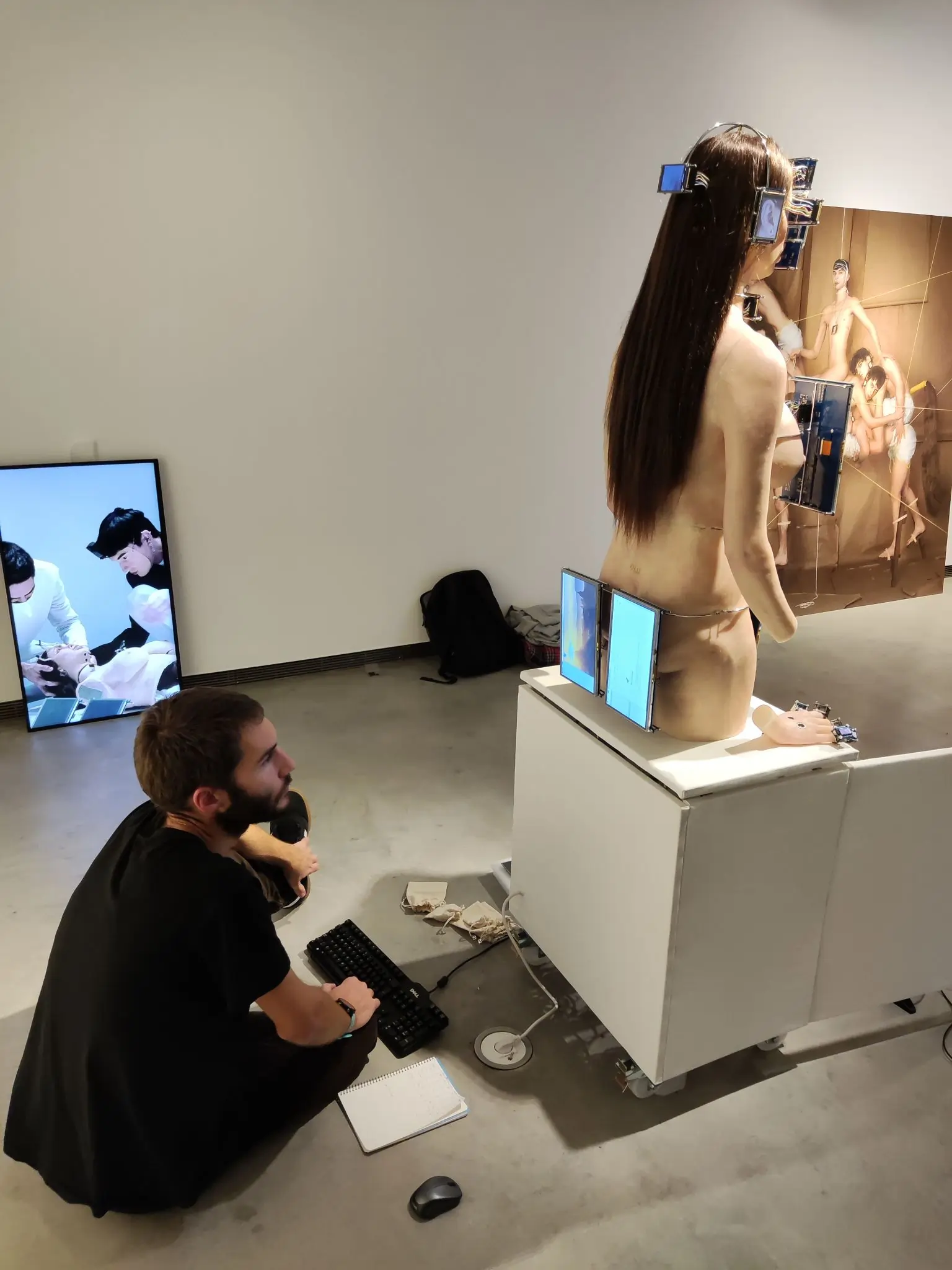
The most demanding component of the project: designing and manufacturing the electronics capable of managing 25 screens simultaneously with coordinated random playback, no visible latency between screens, and the ability to respond to viewer interaction in real time.
Maedcore designed the distributed control architecture that manages each screen independently but in a coordinated manner, with a master system that orchestrates the randomness of the videos played, ensuring the experience never repeats in the same way.
Connection Structure
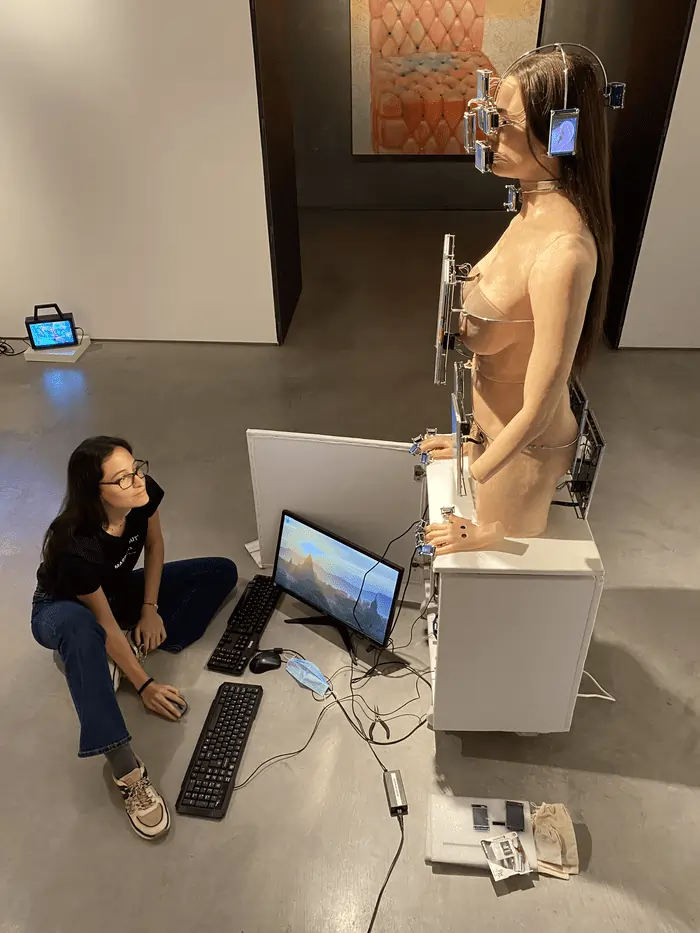
Maedcore also designed the physical connection structure between screens and the control electronics, optimised to:
- Facilitate assembly and disassembly for travelling exhibitions.
- Conceal the cabling to preserve the installation’s aesthetic.
- Ensure mechanical robustness and electrical reliability during weeks of continuous exhibition.
Dual Interaction System
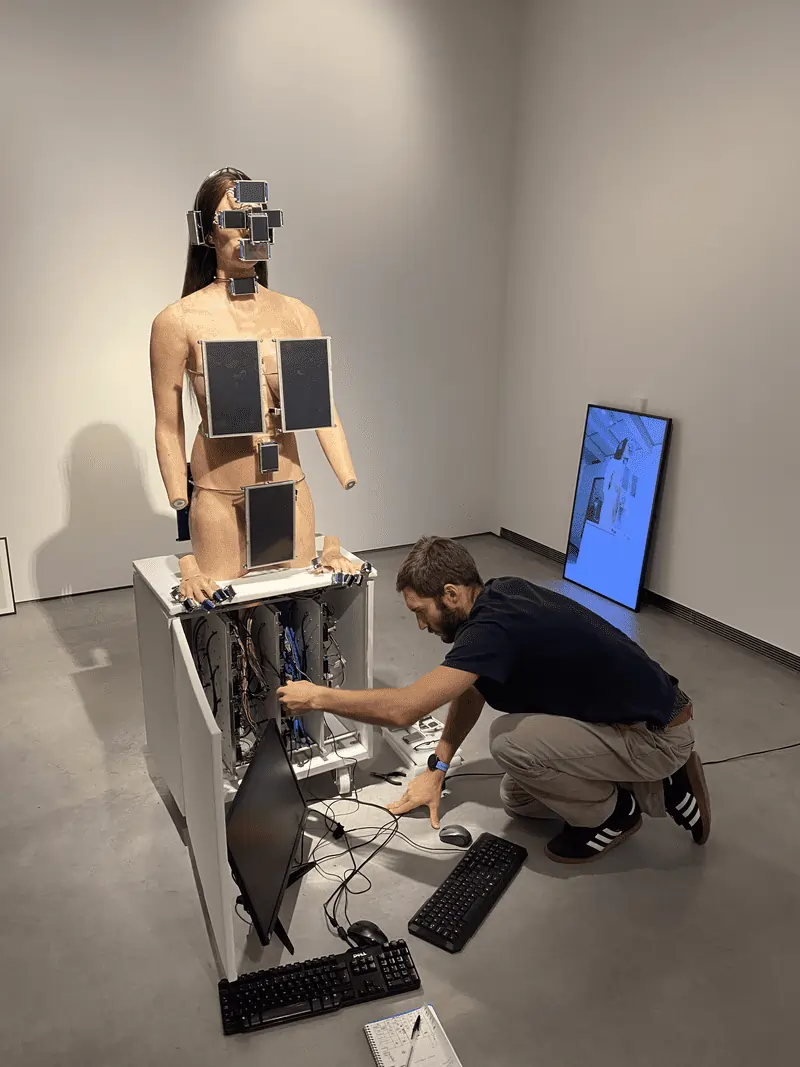
The interactivity of the work was implemented through two modes of interaction:
Distance sensors: detect the presence and proximity of the viewer to the installation. The distance influences the behaviour of the screens — which videos play, at what speed, with what level of fragmentation. The viewer does not need to touch anything to begin interacting; their mere presence activates the work.
Touchscreens: the viewer can directly touch the screens to trigger specific behaviours, explore particular video sequences or alter the coordination between screens. Touch introduces a more direct and intentional dimension of control into the experience.
The Work: Pi(x)el at Espacio SOLO
The complete installation consists of 25 screens mounted on a structure designed by Ćustić, which randomly and coordinately play video fragments of the human body. The sum of the screens recreates — and simultaneously fragments — the human figure into pixels, creating a visual metaphor about digital identity and the representation of the human being in virtual space.
Exhibited at Espacio SOLO (Madrid), Pi(x)el was received as one of the most technically sophisticated installations of the season, with a technology-art integration that allowed visitors to become co-authors of the experience.
The Artist–Engineering Collaboration: A Working Model

The collaborative process between Ćustić and Maedcore illustrates a working model that is redefining contemporary art: the artist provides the vision, concept and aesthetic direction; the engineer provides technical feasibility, hardware development and control software. Neither can create the work without the other.
Maedcore operated in this project as a creative technical studio — not as a component supplier, but as a co-builder of the artistic experience.
Technologies Used
Project developed with: Mechatronics — Embedded Systems — Robotics — Control Electronics — Interactive Sensors
Are You an Artist or Cultural Institution With a Project That Needs Engineering?
Pi(x)el demonstrates that technology can be entirely at the service of artistic vision without betraying either. If you have an idea for an interactive installation, museum, exhibition or digital experience and need a technical team to make it a reality, let’s talk.
Tell Us About Your Artistic Project | View Mechatronics Projects | Embedded Systems Services
Ready to transform your company?
Book a free 30-minute meeting with an engineer.