Virtual Reality in Industry: Use Cases, Benefits and Key Technologies
Discover how virtual reality is transforming industrial training, design and maintenance. Real cases, technologies and measurable ROI with VR in business.
What Is Industrial Virtual Reality?
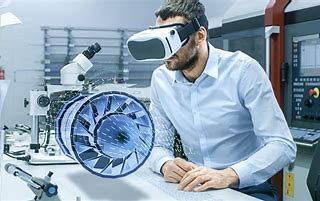
Industrial virtual reality (VR) is the application of immersive three-dimensional environments — generated by computer and visualised through VR headsets such as Meta Quest, HTC Vive or Varjo — to production, engineering and training processes. Unlike recreational use, industrial VR prioritises precision, integration with CAD/BIM systems and corporate scalability.
Main VR Use Cases in Industry
Training and Risk Simulation
VR environments make it possible to replicate highly dangerous situations — fires, chemical explosions, electrical accidents — where workers practise safety protocols without any real risk. The benefits are clear:
- Reduction in workplace accidents by improving emergency response.
- Lower cost compared to physical drills with real materials and equipment.
- Traceability — the system records every trainee decision for evaluation.
3D Product Design and Review
Engineers and designers can visualise full-scale prototypes before manufacturing a single part. Integration with CAD software (SolidWorks, CATIA, Autodesk) allows models to be imported directly into the virtual environment for collaborative real-time reviews, even with globally distributed teams.
Remote-Assisted Maintenance
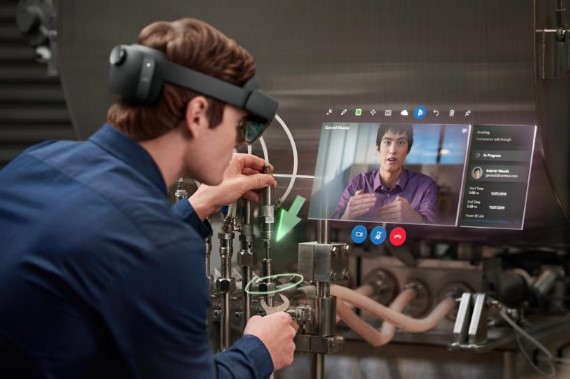
Expert technicians remotely guide on-site operators using augmented reality overlays or shared VR sessions. This reduces travel, accelerates incident resolution and is especially valuable for hard-to-access assets (offshore plants, wind turbines, mines).
Plant Layout Planning and Digital Twins
VR combined with digital twins allows changes to plant layout, production flows or the installation of new machinery to be simulated before physical execution, reducing reconfiguration costs and planning errors.
Enabling Technologies
| Technology | Role in Industrial VR |
|---|---|
| VR Headsets (Meta Quest 3, Varjo XR-4) | Immersive visualisation device |
| 3D Engines (Unity, Unreal Engine) | Rendering of virtual environments |
| CAD/BIM Integration | Import of real design models |
| Cloud Rendering | Graphic processing without powerful local hardware |
| Hand and Body Tracking | Natural interaction without controllers |
| 5G / Edge Computing | Minimum latency for multi-user experiences |
ROI and Success Metrics
Before investing, it is essential to define clear KPIs:
- Training time — how much is reduced compared to the traditional method?
- Knowledge retention rate — PwC studies show VR improves retention by 75% compared to video-based training.
- Accident reduction — pre/post implementation comparison.
- Cost per training hour — VR amortises the initial investment beyond a certain training volume.
- Design cycle time — reduction in physical prototype iterations.
Adoption Barriers and How to Overcome Them
High initial cost: Industrial VR projects have a development cost that may seem high, but a 3-year TCO (total cost of ownership) analysis usually demonstrates net savings compared to traditional methods.
Resistance to change: Team training and internal communication of the benefits are critical for adoption.
Integration with legacy systems: A well-designed API architecture allows the VR platform to connect with existing ERP, LMS or SCADA systems.
Ready to transform your company?
Book a free 30-minute meeting with an engineer.