Why Digital Twins Are Redefining Industrial Efficiency in 2025
How industrial plants in Madrid are using digital twins to reduce downtime by 35% and extend the lifespan of their assets.

Written by Eduardo Fuentevilla Blanco
Robotics Engineer at Maedcore · Robotics Engineer LinkedIn ↗

The Problem Nobody Wants to Admit
Your plant has inefficiencies your team has long stopped noticing. Unplanned stoppages that “have always been this way.” Bottlenecks that everyone knows about but nobody measures. Reactive maintenance dressed up as protocol.
The digital twin is not a pretty visualisation tool. It is a mirror that shows what your data has been trying to tell you for years.
What an Industrial Digital Twin Really Is
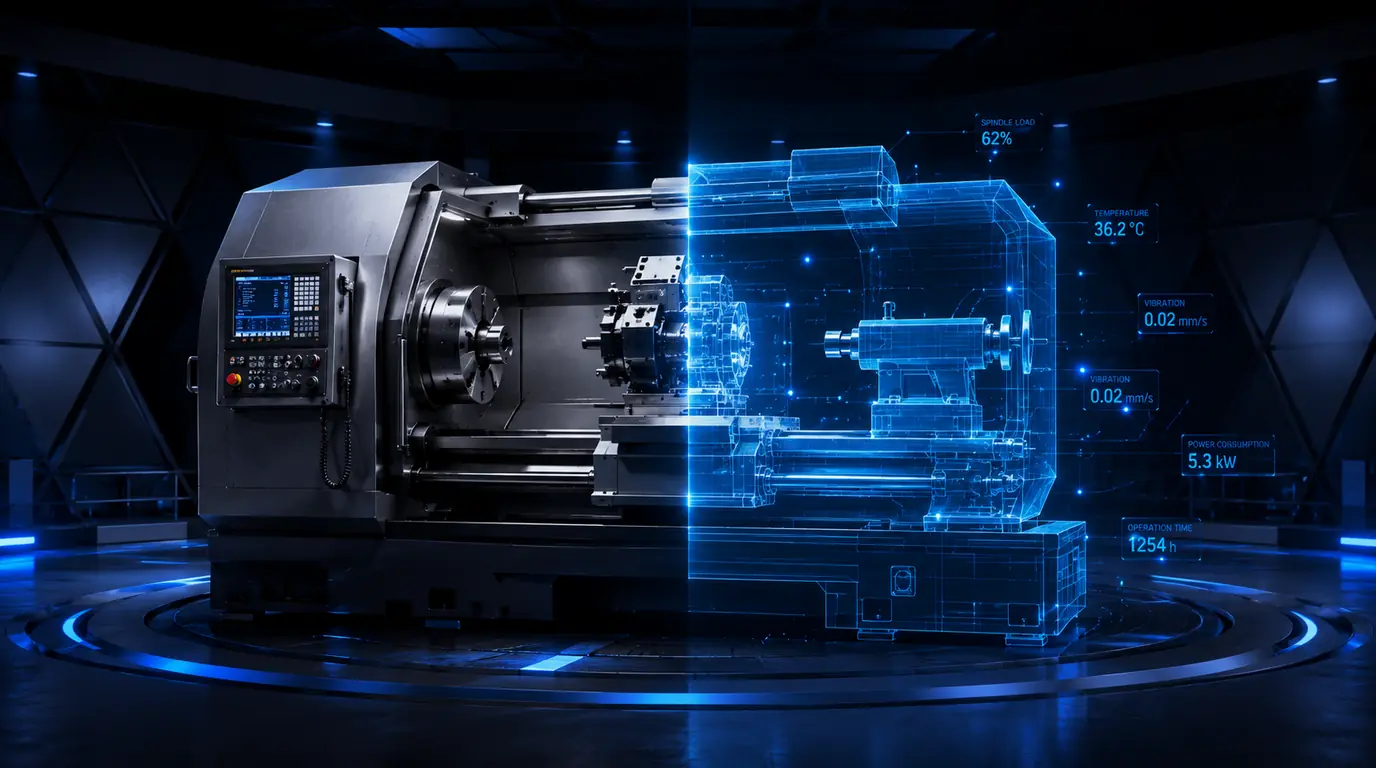
A digital twin is a dynamic virtual replica of your physical facility, fed in real time by IoT sensors, PLC data and historical records. Unlike a static CAD model, the digital twin:
- Breathes: updates with every sensor reading
- Predicts: anticipates failures before they occur
- Simulates: lets you test changes without touching the physical plant
In our experience with facilities in the Community of Madrid, implementing digital twins has reduced unplanned downtime by between 28% and 41% within the first 12 months.
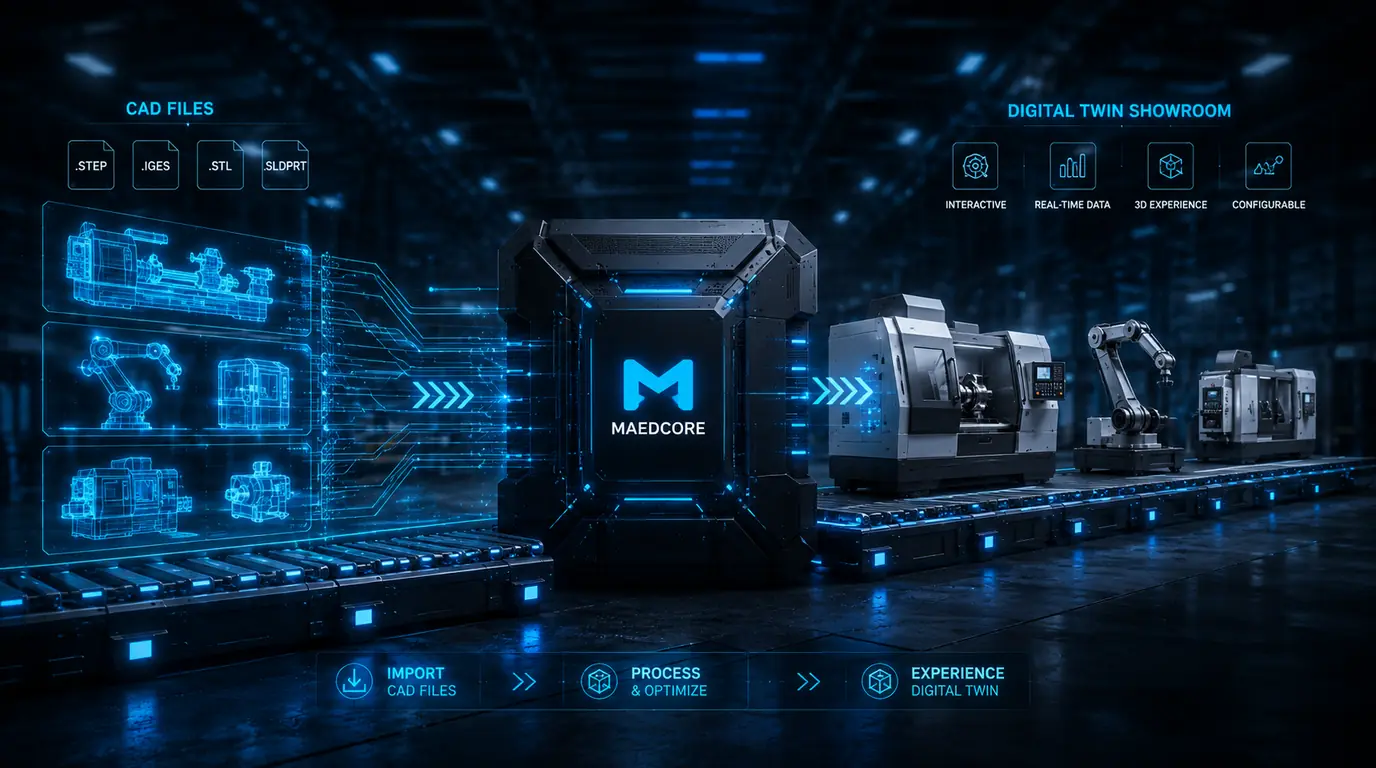
It is worth separating two uses of the term, because they are not built the same way. The operational digital twin this article describes runs on sensor data and exists to predict and simulate. The geometric digital twin replicates the machine with visual fidelity at 1:1 scale and exists to show it — that is what sits behind OmniViewer, our VR showroom for industrial machinery, where a buyer walks around equipment that may not have been manufactured yet. Many manufacturers end up needing both.
The Case of a Component Manufacturing Plant in Getafe
Data anonymised with client authorisation.
An aerospace component manufacturer in Getafe was operating with a fixed-schedule maintenance system. The result: unnecessary replacements, unexpected stoppages at critical moments, and an asset utilisation rate of 67%.
After implementing our digital twin system integrated with vibration and temperature sensors on 23 key machines:
| Metric | Before | After (12 months) |
|---|---|---|
| Unplanned stoppages | 14/quarter | 4/quarter |
| Asset utilisation | 67% | 89% |
| Maintenance cost | Base 100 | 68 |
| Response lead time | 4.2 hours | 0.8 hours |
Why Most Implementations Fail
Digital twin technology is mature. The problem is integration. Many companies:
- Hire software vendors who do not understand the hardware
- Install sensors without defining which questions they want to answer
- Generate dashboards nobody ever looks at
Our approach is different because we are engineers before we are developers. We design the data capture system at the same time as the digital model, ensuring that every sensor measures something actionable.
The Three Steps to Get Started
You do not need to digitalise your entire plant at once. The most effective approach is:
1. Critical asset audit: identify the 5–10 machines whose downtime creates the greatest economic impact.
2. Minimum viable instrumentation: install only the sensors needed for the variables that matter (temperature, vibration, pressure, cycles).
3. Incremental model: start with a partial twin, validate the ROI, and scale.
Would you like to see how this would apply to your facility? We offer a free 30-minute diagnostic with a specialist engineer.
Related reading
See a digital twin in practice — our UAV stabilisation case study tuned control systems with zero physical risk. Explore our mechatronics services.
About the Author
Robotics Engineer
For over a decade, I have been driven by a single mission: leveraging AI and robotics to build a world of automated production. I believe that by creating self-sufficient systems, we can empower people to refocus on what truly matters—their families and their passions. My expertise spans from winning prestigious European startup competitions to architecting complex, integrated hardware and software projects. I specialize in bridging the gap between today's industrial challenges and tomorrow's autonomous solutions.
Frequently Asked Questions
What is a digital twin in industrial manufacturing?
How do digital twins improve operational efficiency?
What technology is needed to build a digital twin?
What is the difference between a digital twin and a simulation?
How much does a digital twin implementation cost?
Ready to transform your company?
Book a free 30-minute meeting with an engineer.