VR Training vs. Traditional Classroom Training: ROI Comparison for Manufacturing
VR training vs. classroom training in manufacturing: a side-by-side comparison of cost, knowledge retention, safety outcomes, and ROI for industrial operators.

Written by Eduardo Fuentevilla Blanco
Robotics Engineer at Maedcore · Robotics Engineer LinkedIn ↗
Key Takeaways
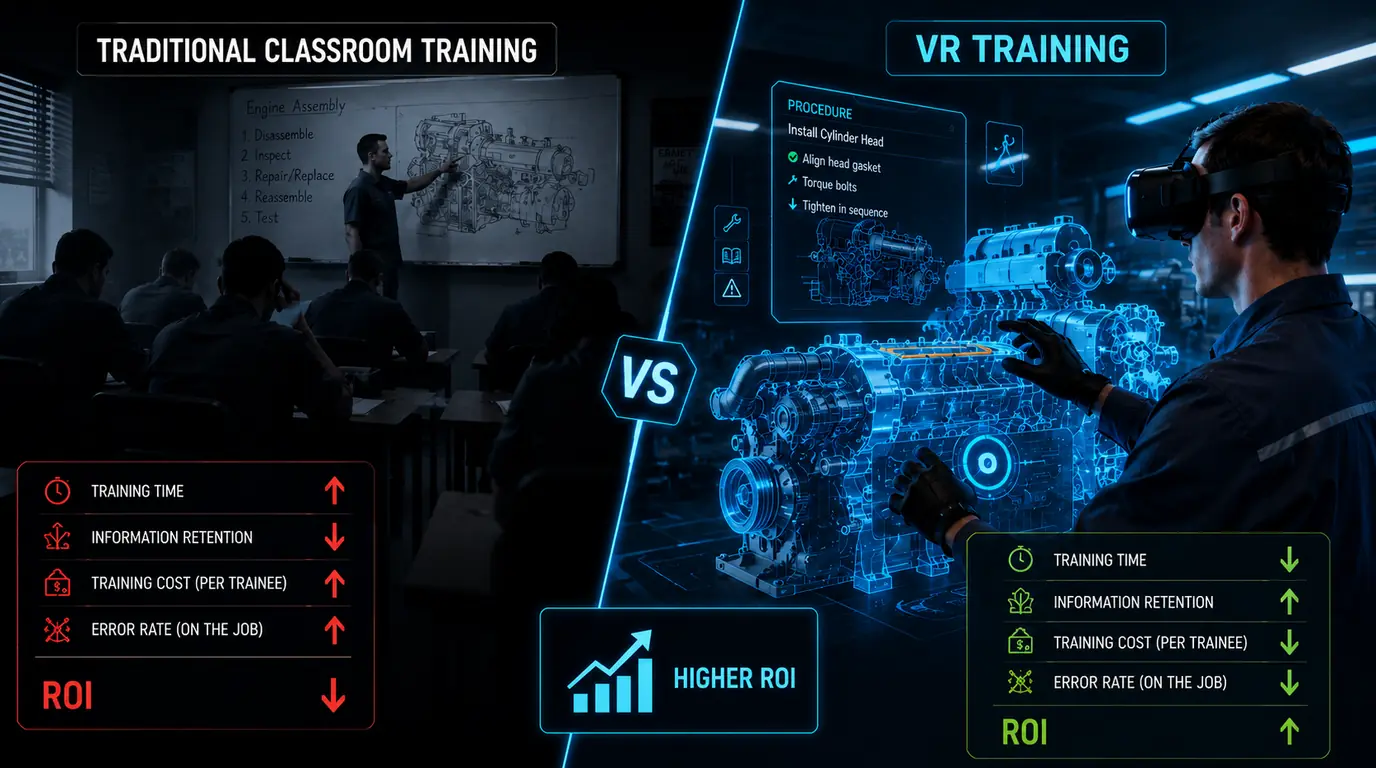
- ► VR training improves knowledge retention by ~70% vs. 10% for lecture-based classroom instruction.
- ► Training accidents are eliminated: operators practice dangerous procedures in a zero-risk virtual environment.
- ► VR has higher upfront development cost (€3,800–€15,000) but lower per-trainee cost at scale — breaks even at ~30–50 trainees.
- ► Hybrid delivery (VR for hands-on practice, classroom for theory) consistently outperforms either method alone.
The Question Every Training Manager Faces
When a new operator needs to learn a press line, a robotic welding cell, or a chemical dosing process, you have two primary options: put them in a classroom with slides and a video, or build a virtual replica of the environment and let them practice.
Both methods have proven track records. The differences emerge when you look at retention rates, training accidents, scalability, and cost per trained operator.
How Each Method Works
Traditional Classroom Training
Classroom training delivers theoretical knowledge through presentations, manuals, videos, and instructor-led demonstration. For hands-on practice, trainees move to real equipment — often supervised — after the conceptual phase.
Advantages:
- Low barrier to delivery: any space and a projector
- Effective for theory, regulations, and safety culture discussions
- Allows group dynamics and peer learning
- Immediate instructor Q&A
Disadvantages:
- Retention rate: 10% after 72 hours for passive lecture formats
- Real equipment use during training creates downtime and accident risk
- Difficult to recreate infrequent but critical scenarios (equipment failures, emergency shutdowns)
- Training quality depends heavily on individual instructor skill
VR Training
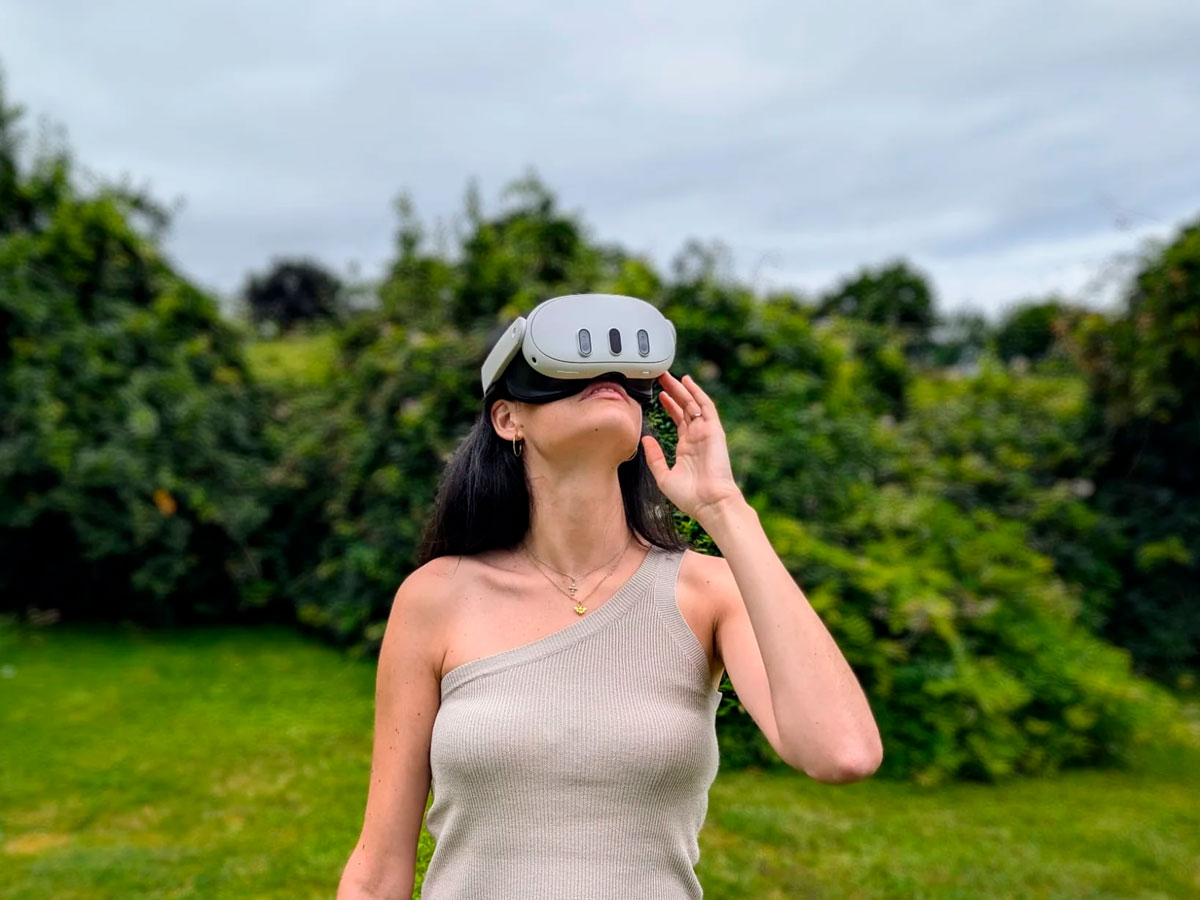
VR training places operators inside an interactive simulation of their real work environment. They wear a headset (Meta Quest, HTC Vive, or similar) and physically interact with virtual controls, machines, and procedures — with real consequences in the simulation but zero real-world risk.
Advantages:
- Retention rate: ~70% because procedural memory forms through physical action
- Zero risk: practice emergencies, failures, and dangerous procedures safely
- Consistent quality: every trainee receives the identical experience
- Repeatable on demand: no equipment downtime, no instructor scheduling
- Quantifiable: track completion, error rates, and time-to-competency per operator
Disadvantages:
- Higher upfront development cost (€3,800–€15,000 per module)
- Headset hardware acquisition (€500–€700/unit)
- Not suited for purely theoretical or regulatory content
- Some operators experience motion discomfort in extended sessions (typically resolved by limiting sessions to 30 minutes)
Retention and Performance Comparison
The difference in training effectiveness is well documented:
| Learning Format | Retention After 72 Hours |
|---|---|
| Passive lecture | 10% |
| Reading | ~10% |
| Audiovisual (video) | ~20% |
| Demonstration | ~30% |
| Practice by doing (hands-on) | ~60% |
| Teaching others / simulation with feedback | ~70% |
VR training places trainees in the “practice by doing” category for hands-on tasks while maintaining the structured feedback loop of a formal training program.
Safety Outcomes
This is where VR shows its most significant advantage in manufacturing contexts.
Traditional Training Safety Risks
- Trainees operating real equipment before full competency
- Infrequent scenarios (emergency shutdowns, lockout/tagout failures) rarely practiced
- Near-miss incidents during on-the-job training counted as “learning experiences”
VR Training Safety Outcomes
- All dangerous scenarios practiced without any real-world consequence
- Emergency procedures rehearsed until muscle memory forms
- Error rates measured and corrected before operators touch real equipment
- Documented completion records for compliance and audit purposes
In high-risk manufacturing environments (chemical handling, press operations, working at height), the value of eliminating training-phase accidents is often larger than the total VR development cost.
Cost Comparison
Per-Module Development Cost
| Item | Classroom | VR |
|---|---|---|
| Curriculum development | €2,000–€8,000 | €3,800–€15,000 |
| Hardware | None | €500–€700/headset |
| Delivery (per session) | €400–€1,200 (instructor time) | ~€0 (self-guided) |
| Equipment downtime during training | 2–4 hours/session | None |
Per-Trainee Cost at Scale
| Trainees | Classroom (total) | VR (total) | Break-Even |
|---|---|---|---|
| 10 | €6,000–€20,000 | €8,000–€20,000 | Comparable |
| 30 | €18,000–€44,000 | €8,500–€20,500 | VR cheaper |
| 100 | €42,000–€128,000 | €10,000–€22,000 | VR 4–5× cheaper |
| 500 | €210,000+ | €12,000–€25,000 | VR 8–15× cheaper |
The break-even point typically falls between 30–50 trainees. Beyond that threshold, VR’s near-zero marginal delivery cost creates compounding savings.
Which Method for Which Training Type?
| Training Content | Recommended Method | Reason |
|---|---|---|
| Machine operating procedures | VR | Procedural memory requires physical practice |
| Emergency shutdown drills | VR | Must be rehearsed safely before any real event |
| Equipment troubleshooting | VR | Failure scenarios impossible to recreate safely on real equipment |
| Safety regulations and compliance | Classroom | Conceptual understanding needs discussion and Q&A |
| Team coordination and communication | Classroom | Group dynamics essential to the skill being learned |
| Onboarding overview (company, roles) | Classroom | Social integration is part of the goal |
| Annual refresher training | VR | Zero scheduling friction, consistent quality |
The Hybrid Approach: Recommended Standard
The highest-performing manufacturing training programs use a hybrid delivery model:
-
Classroom Phase (Day 1): Safety regulations, company standards, equipment overview. Instructor-led, 3–4 hours.
-
VR Practice Phase (Days 2–5): Hands-on simulation of all operating procedures, fault conditions, and emergency scenarios. Self-guided with performance metrics recorded.
-
Supervised Real Equipment Phase (Days 6–10): Operator works on real equipment with a supervisor, referencing VR-developed competency as baseline. Significantly shorter than traditional on-the-job training because VR has already built procedural memory.
-
Annual VR Refresher: Mandatory scenarios refreshed annually in VR without pulling operators off the line for full days.
Maedcore’s VR Training Solutions
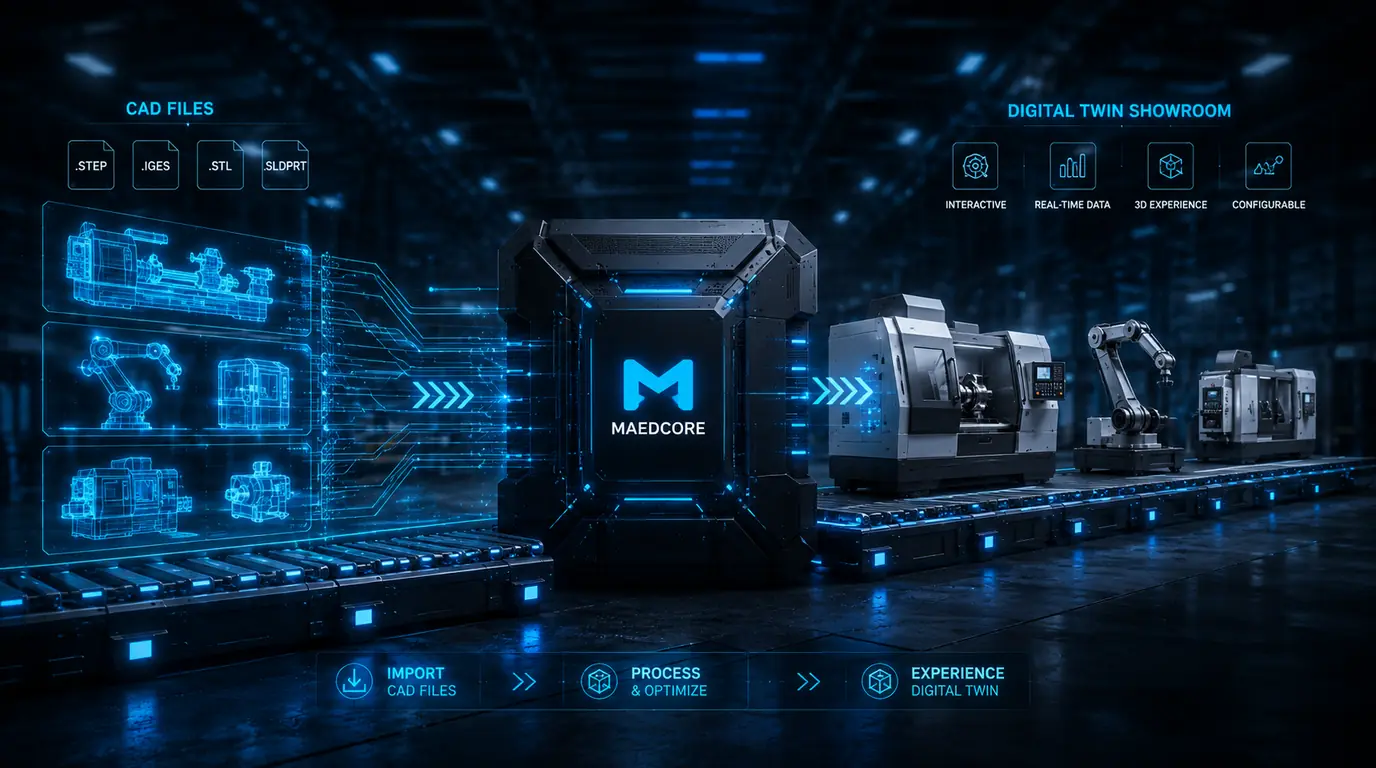
Maedcore builds industrial VR training environments from existing 3D CAD files or from scratch using photogrammetry of real equipment. Typical delivery:
- Standard module: 1 operating procedure, 2–3 fault scenarios, performance dashboard — from €3,800
- Full training suite: 5+ procedures, emergency drills, multilingual support — from €8,500
- Standalone headset configuration: Meta Quest deployment for 4 headsets included in project scope
Explore VR Training Services →
Related reading
- Virtual Reality in Industry — the overview: use cases, benefits and the technologies underneath.
- VR Showroom for Industrial Machinery Sales — the sales-side application: showing the machine without shipping it.
- Maedcore — Immersive Experiences — what we build in this area.
About the Author
Robotics Engineer
For over a decade, I have been driven by a single mission: leveraging AI and robotics to build a world of automated production. I believe that by creating self-sufficient systems, we can empower people to refocus on what truly matters—their families and their passions. My expertise spans from winning prestigious European startup competitions to architecting complex, integrated hardware and software projects. I specialize in bridging the gap between today's industrial challenges and tomorrow's autonomous solutions.
Frequently Asked Questions
Is VR training more effective than classroom training for manufacturing operators?
How much does industrial VR training development cost?
When does VR training become cheaper than classroom training per trainee?
Can VR replace all classroom training in manufacturing?
What hardware is needed for VR operator training?
Ready to transform your company?
Book a free 30-minute meeting with an engineer.