Virtual Sales Demos for Industrial Machinery: How to Close Deals Without a Factory Visit
How industrial machinery sales teams run remote demos that shorten the sales cycle. Decision matrix, real costs and the mistakes that kill deals.

Written by Eduardo Fuentevilla Blanco
Robotics Engineer at Maedcore · Robotics Engineer LinkedIn ↗
Key Takeaways
- ► Industrial machinery sales teams lose €18,600–€21,100 per deal in logistics, travel and pre-sale engineering time before close — a virtual demo asset pays back in fewer than 2 deals.
- ► 20% of B2B organisations already close deals worth up to $10M without ever meeting the supplier in person (McKinsey B2B Pulse 2024, n=3,942), but 40% of buyers working with a new supplier still require in-person contact at some point in the process.
- ► The right virtual demo format depends on two variables: machine complexity tier (A catalogue / B semi-custom / C bespoke) and sales cycle stage — no single format works for all cases.
- ► Virtual demo asset creation costs range from €8,000 (basic browser 3D model) to €80,000 (fully guided custom VR experience); timelines run from 4–8 weeks for a minimum viable demo to 6–18 months for an IoT-connected digital twin.
- ► The most-cited ROI figures for interactive demos come from SaaS software studies, not capital equipment — the Ricoh logistics case (2020) remains the only primary documented example with a specific figure for machinery sales demos.
- ► The most costly mistake in practice: building the virtual asset for a trade fair and never integrating it into the day-to-day sales process — without CRM-connected analytics, the virtual demo generates no pipeline intelligence.
Industrial machinery sales teams lose between €18,000 and €21,000 per deal in travel, logistics and pre-sale engineering time — before the buyer has signed anything. At the same time, 20% of B2B organisations already close deals worth up to $10 million without ever meeting the supplier in person, according to the McKinsey B2B Pulse Survey 2024 (n=3,942 executives across 13 countries). The question is no longer whether virtual demos for industrial machinery are viable — it’s which format to use, at which stage of the cycle, and for which type of machine.
The real problem: demonstrating a 10-tonne machine to a buyer in Chicago
The physical demo remains the gold standard in capital equipment sales — and for good reason. Watching a CNC machining centre run at full load, hearing the cycle, measuring residual vibration: none of that travels through a PowerPoint deck. The problem is not the demo itself; it’s the logistics around it.
Spain’s machine-tool sector closed 2024 with record sales of €2.3 billion according to AFM Clúster, but contracted nearly 5% in 2025 to €2.208 billion according to the Solunion Sector Flash. What does not change: 78.8% of production is exported. A manufacturer in the Madrid industrial corridor or the Álava Technology Park cannot afford to fly every potential buyer in from Chicago, Stuttgart or Monterrey — nor ship the machine to them.
The cost of a large custom island stand at a major trade fair runs between €50,000 and €150,000, according to Adam Expo Stand citing IFEMA and CEIR project data. And that is just the stand — machine logistics on top. Ricoh documented that transporting its industrial production presses to demonstration events worldwide cost more than $150,000 per machine per event (2020 figure — the only primary case with a specific number available in the public literature). For a mid-sized OEM with three product lines and four export markets, that model is structurally unsustainable.
The paradox: IFEMA’s own data shows trade fairs are not dying. In 2024 the venue billed €230.2 million — 30% more than in 2023 — and its digital platform generated 43,220 business leads for exhibitors. The problem is not the event; it is the cost of getting the machine there — and doing it across three export markets simultaneously.
What has changed in industrial buyer behaviour
The 2025 industrial buyer spends only 17% of the purchase process meeting with suppliers — and when those meetings are supported by the supplier’s digital tools, the probability of closing a high-quality deal is 1.8× higher, according to Gartner (survey of 632 B2B buyers, 2024).
That same Gartner study reports that 75% of B2B buyers prefer a purchase experience with minimal sales rep involvement. Here is the first contradiction worth naming: preferring self-service is not the same as making better decisions through self-service. Self-serve purchases carry significantly higher regret rates. For industrial machinery — where a specification error costs hundreds of thousands of euros — the hybrid model is not an option; it is the only viable model.
The McKinsey B2B Pulse Survey 2024 frames this with its “rule of thirds”: at any stage of the buying process, one third of customers prefer in-person interactions, one third want remote communication, and one third prefer digital self-service. This data is frequently summarised as “two thirds prefer digital” — technically accurate but misleading. The in-person third does not disappear. Forty percent of buyers working with a new supplier still want to have met them face-to-face before signing. For an industrial OEM selling to new accounts in export markets, the virtual demo is a qualifier and accelerator, not a substitute for the final visit.
Forrester’s diagnosis is equally sobering: 86% of B2B purchases stall during the process, and 81% of buyers express dissatisfaction with the supplier they ultimately choose (State of Business Buying 2024, more than 16,000 global buyers). The status quo — sporadic physical demos, PowerPoint decks in between — is not working well for anyone. The virtual demo does not replace the technical sales engineer; it makes their time count.
Why the structural cost of the physical demo is no longer sustainable
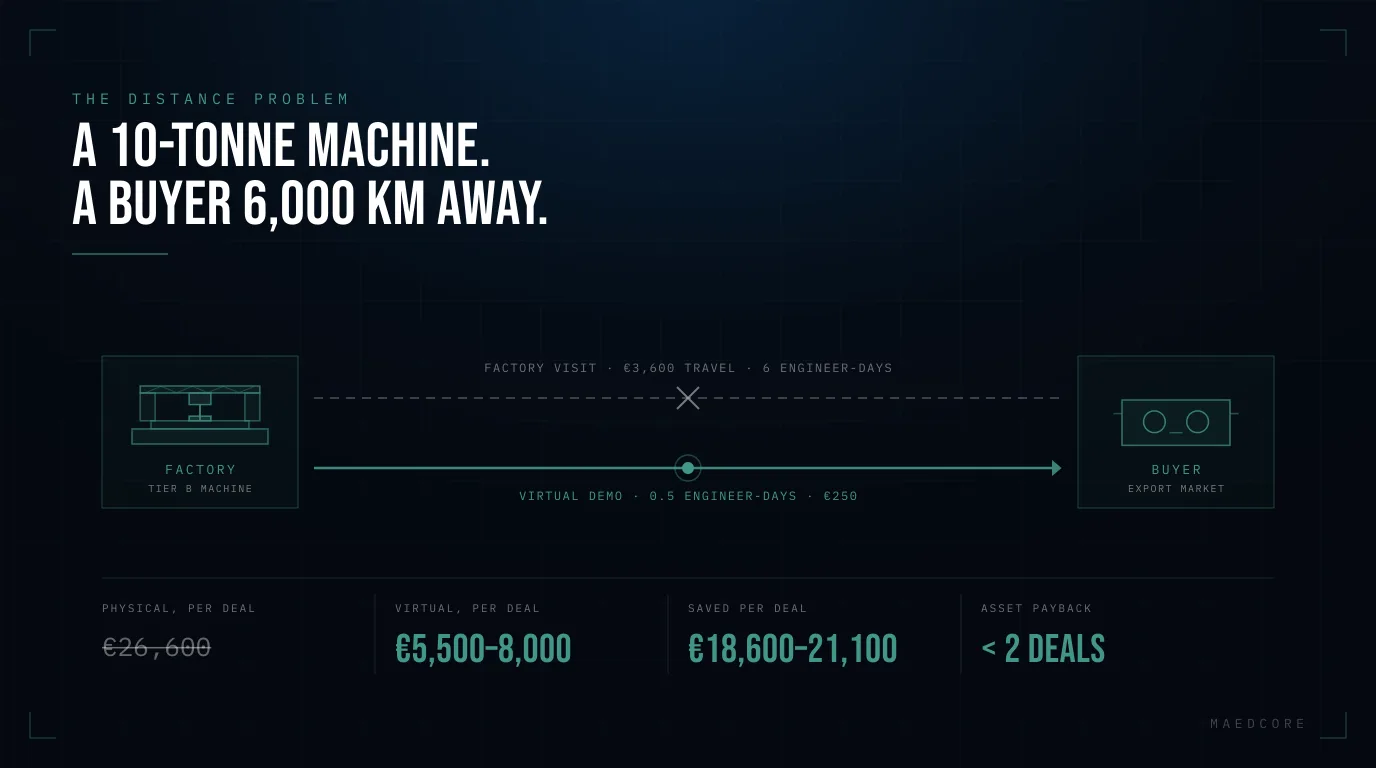
Transporting an industrial press to a demonstration event can cost more than $150,000 per machine per event — a cost no mid-sized manufacturer can sustain across three simultaneous export markets.
The cost per qualified lead at a trade fair, according to CEIR via Adam Expo Stand, averages $142, versus $259 for field sales. That differential makes the trade fair look efficient — until you add machine logistics. When the physical asset you need to demonstrate weighs ten tonnes or cannot move without a special transport permit, the real cost per lead jumps by several orders of magnitude.
The pressure is structural, not cyclical. A domestic market contracting 5% in 2025, combined with an 78.8% export dependency, forces Spanish OEMs to reach buyers in North America, Germany and Southeast Asia at a frequency that physical logistics simply cannot support. The answer is not to abandon trade fairs — IFEMA remains a relevant lead generator — but to stop depending on the physical presence of the machine to qualify and advance opportunities.
The Virtual Demo Readiness Matrix for Industrial Machinery
There is no single virtual demo format for industrial machinery: the right choice depends on two variables — machine complexity and sales cycle stage — and the difference between choosing well or badly can mean recovering your investment in two deals or in twenty. What follows is a decision framework that, as far as we have been able to verify in the research for this article, does not exist anywhere else in the public literature at this level of specificity for the industrial context.
Axis 1 — Machine complexity tier
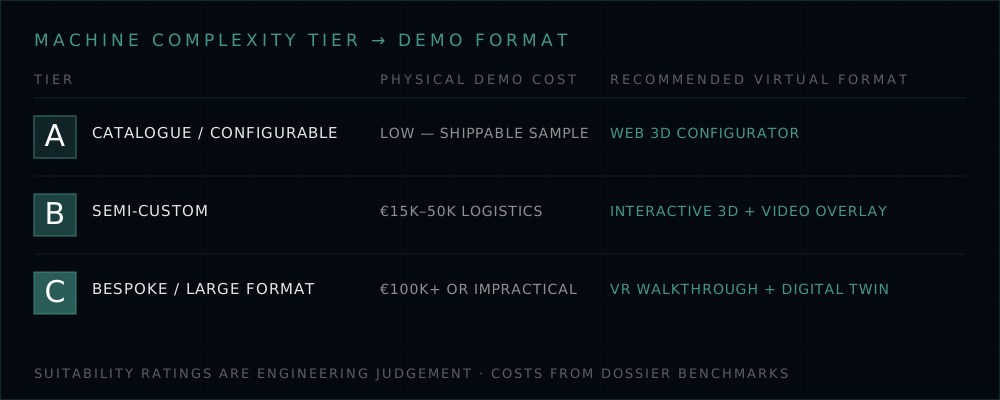
| Tier | Example | Physical demo cost (estimated) | Recommended virtual format |
|---|---|---|---|
| A — Catalogue / Configurable | Standard compressor, pump, conveyor belt | Low (shippable sample) | Web 3D configurator — high suitability |
| B — Semi-custom | CNC machining centre, packaging line module | Medium (€15K–€50K logistics) | Interactive 3D + real video overlay — high suitability |
| C — Bespoke / Large format | Complete production line, custom press, robotic cell | Very high (€100K+ or impractical) | VR walkthrough + digital twin — essential |
Physical cost ranges based on CEIR, Adam Expo Stand and the Ricoh case benchmarks. Suitability ratings: engineering judgement.
Axis 2 — Sales cycle stage
| Stage | Buying job (Gartner) | Recommended demo format | Objective |
|---|---|---|---|
| 1. Awareness / Problem identification | Problem identification | 60-second product video + frictionless web 3D viewer | Get onto the shortlist |
| 2. Qualification | Solution exploration | Video call + 3D model on shared screen | Qualify fit, surface specifications |
| 3. Technical evaluation | Requirements building | Guided interactive VR/AR session (headset or browser) | Resolve technical objections |
| 4. Stakeholder alignment | Consensus creation | Async leave-behind: self-navigable 3D model + embedded video | Enable the internal champion |
| 5. Validation / Close | Validation | Factory visit OR live remote run (IoT-connected machine) | Final confidence |
ROI calculation — worked scenario with explicit assumptions
Assumptions: Spanish machine-tool OEM, Tier B machine, average deal value €180,000, 4 demos per deal, 12 deals per year, 3 international prospects per deal requiring travel.
| Cost line | Physical demo (current state) | Virtual demo (proposed) |
|---|---|---|
| Travel per prospect (flight + hotel, 2 days) | €1,200 × 3 = €3,600/deal | €0 |
| Machine logistics / trade fair setup | €20,000/event × 3 events | €0 (reusable asset) |
| Technical sales engineer time (travel days) | 6 days × €500/day = €3,000/deal | 0.5 days × €500 = €250/deal |
| Virtual demo asset creation (one-off) | — | €15,000–€40,000 (amortised over 3 years) |
| Platform licence (annual) | — | €3,000–€8,000/year |
| Estimated total per deal | ~€26,600 | ~€5,500–€8,000 |
| Saving per deal | — | ~€18,600–€21,100 |
| Asset creation payback | — | < 2 deals |
All figures are engineering judgement based on dossier benchmarks (CEIR, Adam Expo Stand, Ricoh case). Presented as illustrative, not as a guaranteed outcome. Actual costs vary by supplier, 3D model complexity and prospect geography.
The figure that surprises most in practice: payback occurs before the second deal closed under the new format. For a company with 12 deals per year, that means the virtual asset pays for itself in the first quarter of use — provided it is properly integrated into the commercial process.
The 5 questions a sales director must answer before choosing a format
- Can the core value proposition be demonstrated without physical operation? If yes → virtual-first.
- Is the prospect’s buying committee geographically dispersed? If yes → the async leave-behind is non-negotiable.
- Does the deal value exceed €100K? If yes → the ROI on asset creation is positive in fewer than 2 deals.
- Does the prospect need to see the machine running under real load? If yes → plan a hybrid: virtual pre-demo + live remote run via IoT, or factory visit only at the final validation stage.
- Is it a standard SKU or a bespoke machine? Bespoke → digital twin approach; standard → 3D configurator.
How a virtual demo asset is built: from CAD to interactive model
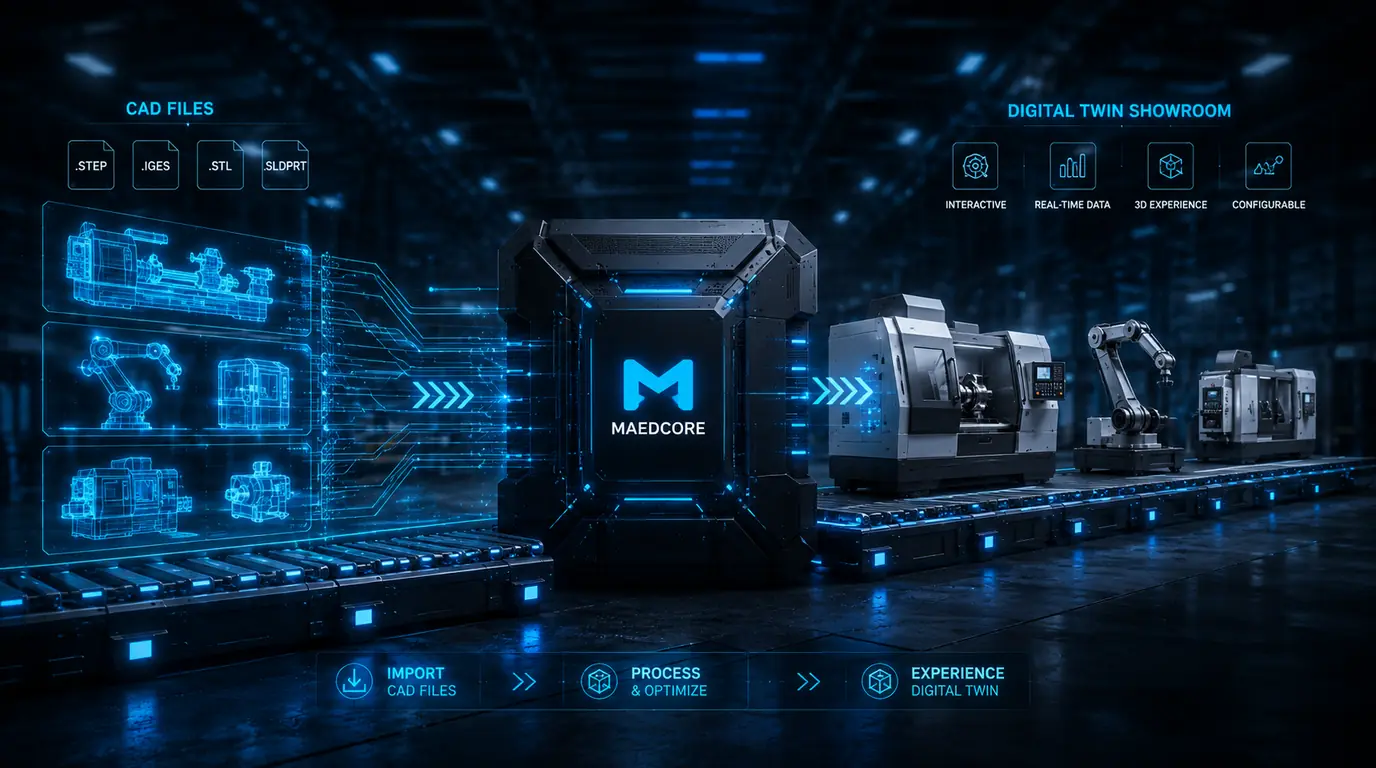
The starting point — and the advantage industrial manufacturers systematically underestimate — is the CAD files that already exist. A model in SolidWorks, CATIA or NX contains all the geometry needed; conversion to real-time 3D (glTF or USD formats) using tools like PiXYZ or Autodesk Forge typically takes 2–6 weeks per SKU depending on polygon complexity. That is the real preparation work; everything that follows — animation, hotspots, guided narrative — is built on top of that foundation.
Realistic cost ranges:
| Element | Low cost | High cost | Notes |
|---|---|---|---|
| Interactive 3D model (1 SKU from CAD) | €8,000 | €25,000 | Depends on animations and level of detail |
| Interactive web viewer (platform licence) | €3,000/year | €8,000/year | Sketchfab Enterprise, Kaon, Vectary, etc. |
| VR headset kit (2 units for the sales team) | €5,000 | €10,000 | Meta Quest Pro or HoloLens 2 |
| Full VR experience (guided narrative, custom) | €25,000 | €80,000 | Requires a specialist XR studio |
| AR pilot (5–10 users, 8–12 weeks) | €25,000 | €75,000 | Per KGT Solutions / PTC |
One critical note on the prospect side: always assume the buyer has no headset. The practical rule is to always offer a standard-browser-navigable version for the prospect, and reserve headsets for your own sales team in in-person presentations. Sending a file that requires specific hardware kills the demo before it starts.
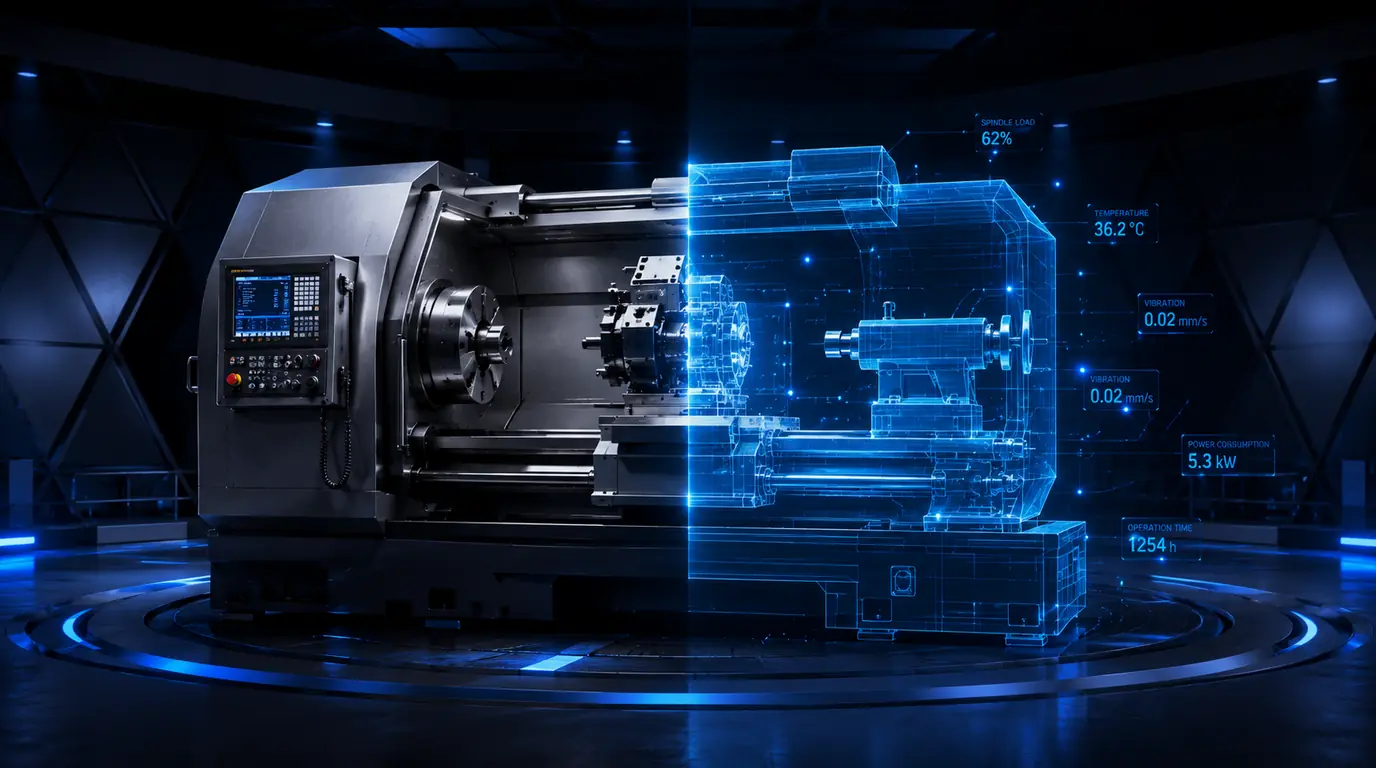
On timelines: a minimum viable browser demo (static 3D model from existing CAD, no animation) can be ready in 4–8 weeks. A guided VR experience with hotspots and a configurator requires 12–20 weeks. A digital twin with real-time IoT data is a 6–18 month project — and the majority of that time is not 3D modelling but integration with the ERP, MES and sensor layer.
In a 3D industrial animation project we built for a rolling-mill line manufacturer, the resulting asset allowed the complete factory process to be presented to international buyers without any travel — the 3D model resolved technical objections that previously required a multi-day site visit. You can read the detail in the Industrial 3D Animation: Selling Twin Factories case study.
The mistakes that kill an industrial virtual demo
The VR/AR-in-manufacturing literature cites striking ROI figures — 72% of manufacturers that deployed AR reported positive ROI in the first year, according to the PTC State of Industrial AR 2025 — but almost all of those data points refer to training, maintenance and assembly guidance use cases, not sales demos. The Ricoh case (demo logistics avoided) remains the only primary documented example with a specific figure for sales, and it is six years old. Apply those ROI numbers to the commercial context with caution.
Here is what we see fail most often in practice:
1. The model looks fake. A low-resolution or poorly lit 3D model destroys credibility for precision machinery. Budget for photorealistic rendering or embed real footage of the machine running inside the 3D environment. Visual credibility is not an aesthetic luxury — it is the sales argument.
2. The buying committee was not on the call. Gartner documents that 74% of B2B buying teams experience internal conflict during the decision process. The plant manager who attended the demo is rarely the CFO who signs the purchase order. A self-navigable leave-behind — a 3D model that any committee member can explore at their own pace — is not a nice-to-have; it is the piece that lets the internal champion sell upward without the sales rep in the room.
3. CRM integration was an afterthought. Without analytics connected to the CRM, the virtual demo generates no pipeline intelligence. Knowing who is reviewing the leave-behind, when, and which sections they spend the most time on is qualification data the sales team cannot obtain any other way.
4. It was built for a trade fair and never used again. A virtual demo asset has value only if there is a content management workflow that keeps it current and integrates it into the day-to-day commercial process. Without that workflow, the asset is obsolete within six months.
5. The final validation visit was skipped. For Tier C machines — complete lines, custom presses, robotic cells — the factory visit at the validation stage is non-negotiable. The virtual demo compresses the cycle and qualifies faster; it does not eliminate the final trust moment for high-value deals. Forty percent of buyers working with a new supplier still want that in-person meeting before committing, according to McKinsey.
Frequently asked questions about virtual demos for industrial machinery
How much does it cost to create a virtual demo for an industrial machine?
The range runs from €8,000 for a basic browser-based interactive 3D model (built from existing CAD files, no animation) to €80,000 or more for a fully guided VR experience with custom narrative and configurator. Most Tier B OEMs — machines with a selling price between €100K and €500K — find the sweet spot in an asset costing €15,000–€25,000, which pays back in fewer than two closed deals based on the ROI calculation developed in this article.
Does the buyer need a VR headset to participate in the demo?
No — and assuming they have one is one of the most common mistakes. For the prospect side, the practical rule is to always offer a standard-browser-navigable version using web formats such as glTF or WebGL. Platforms like Sketchfab Enterprise or Kaon Interactive enable full 3D interaction with no additional hardware. Headsets — Meta Quest Pro, HoloLens 2 — are reserved for the manufacturer’s own sales team in in-person presentations or at trade fairs.
Can a virtual demo completely replace the factory visit?
For standard or configurable machines (Tier A), in many cases yes. For semi-custom or bespoke equipment (Tier B and C), the virtual demo should be understood as a cycle accelerator — it resolves technical objections and aligns the buying committee ahead of the visit — but it does not eliminate the final validation moment for high-value deals. McKinsey documents that 40% of buyers working with a new supplier prefer to have met them in person before committing.
How long does it take to have a virtual demo ready from CAD files?
A minimum viable browser demo (static 3D model, no animation or hotspots) can be ready in 4–8 weeks from CAD file delivery. A guided VR experience with configurator and narrative requires 12–20 weeks. A digital twin with real-time IoT data is a 6–18 month project, where the majority of the timeline corresponds to integration with plant systems (ERP, MES, sensors) — not the 3D modelling itself.
What ROI can an industrial OEM expect from a virtual demo?
Using the dossier benchmarks (CEIR, Adam Expo Stand, Ricoh case) and the explicit assumptions set out in this article: for an OEM with an average deal value of €180,000 and three international prospects per deal, the estimated saving is €18,600–€21,100 per closed deal. The virtual asset pays back in fewer than two deals. These figures are illustrative; actual results depend on export market mix, demo frequency and the internal cost of technical sales engineering.
What virtual demo format works best for a small industrial manufacturer with a lean sales team?
The most efficient minimum viable format for an SME with mid-value machines and three or four sales engineers is a browser-navigable interactive 3D model combined with a short video of the machine running under real conditions. This format requires no headsets, can be shared by email or link, works as a leave-behind for the buying committee, and can be built in 4–8 weeks from existing CAD files. A full guided VR experience makes sense when deal value exceeds €200K and there are multiple technical stakeholders to align.
Related reading
- OmniViewer in Action: Inside Maedcore’s VR Showroom for Industrial Machinery
- How to Calculate the ROI of a Virtual Demo for Industrial Machinery Sales
- Virtual Showroom vs. Industrial Trade Show Booth: A Real Cost and ROI Comparison
Sources
- Gartner — The B2B Buying Journey — Gartner, 2024
- McKinsey — Five Fundamental Truths: How B2B Winners Keep Growing (B2B Pulse Survey 2024) — McKinsey & Company, 2024
- Forrester — State of Business Buying 2024 — Forrester Research, 2024
- AREA — AR and VR Deliver ROI via Efficiencies and Cost Reductions (Ricoh case) — Augmented Reality for Enterprise Alliance, 2020
- KGT Solutions — AR in Manufacturing: 5 Use Cases with Proven ROI — KGT Solutions, 2026 (citing PTC State of Industrial AR 2025)
- EmpresaExterior — Spanish Machinery Sector 2025 — EmpresaExterior, citing AFM Clúster, 2025
- Italcamara — Spanish Machinery Sector 2026 — Italcamara Spain, citing Solunion Machinery Sector Flash 2026, 2026
- Adam Expo Stand — Exhibition Stand Cost Guide 2026 — Adam Expo Stand, citing CEIR, 2026
- IFEMA MADRID — 2024 Results — IFEMA MADRID, via Travel Daily News, 2025
- Maedcore — Industrial 3D Animation: Selling Twin Factories — Maedcore, case study
About the Author
Robotics Engineer
For over a decade, I have been driven by a single mission: leveraging AI and robotics to build a world of automated production. I believe that by creating self-sufficient systems, we can empower people to refocus on what truly matters—their families and their passions. My expertise spans from winning prestigious European startup competitions to architecting complex, integrated hardware and software projects. I specialize in bridging the gap between today's industrial challenges and tomorrow's autonomous solutions.
Frequently Asked Questions
How much does it cost to create a virtual demo for an industrial machine?
Does the buyer need a VR headset to participate in the demo?
Can a virtual demo completely replace the factory visit?
How long does it take to have a virtual demo ready from CAD files?
What virtual demo format works best for a small industrial manufacturer with a lean sales team?
How do you handle the objection 'I need to see it actually running' in an industrial virtual demo?
Ready to transform your company?
Book a free 30-minute meeting with an engineer.